


Slay the Spire
4.34.34K Reviews
App Specs
- Version
- 2.6.1
- Updated On
- License
- $9.99
- Downloads
- 1,000,000+
- Developer
- Balor Games
- Categories
- Card
- Platform
- Android, iOS
Screenshots
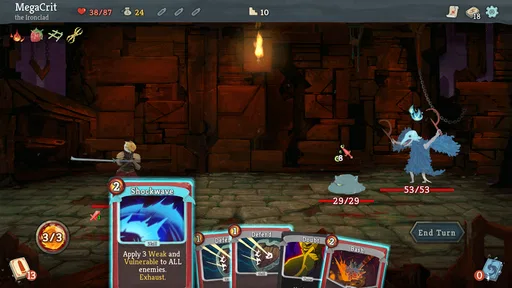
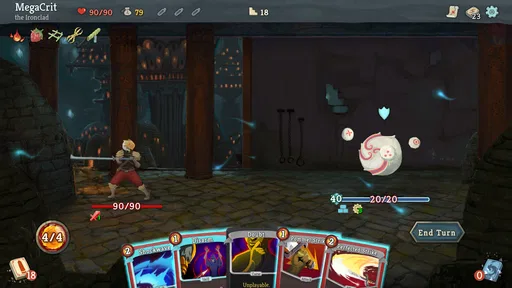
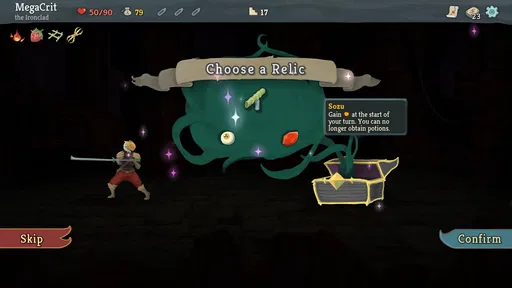
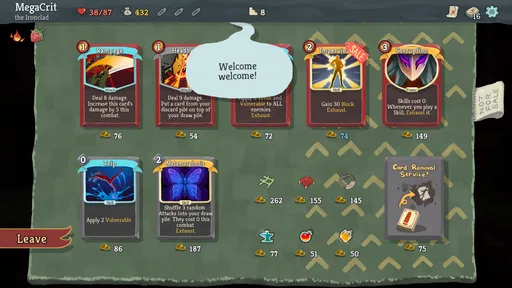
 Analysis by AppCompare
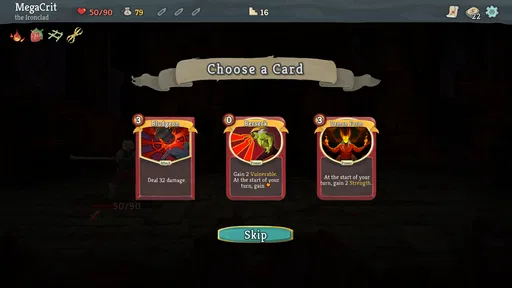
What keeps me interested in Slay the Spire is the way it turns deckbuilding into a series of decisions with consequences. A card reward can look tempting, but taking it changes what your deck is likely to do in later fights. That tension—not simply collecting the biggest attacks—is what gives each climb its shape. I find it especially satisfying when a modest choice made early becomes the reason a difficult battle later feels manageable.
Why each card reward changes the plan
This is a card game about building toward a workable plan while the game keeps changing the choices in front of you. You cannot count on seeing the same rewards or following the same route each time, so a strategy that worked in one run may not come together in another. I try to judge a new card by asking what problem it solves for the deck I have now, rather than assuming every powerful-looking option is automatically useful.
That approach also makes restraint valuable. Adding a card can give you another answer in battle, but it can also make it less likely that you draw the cards you already depend on. When a reward does not fit, passing on it can be the more thoughtful choice. It is a small habit, but it helps keep a deck focused instead of turning every run into a pile of unrelated ideas.
How I think through a run
In practice, I treat each run as a sequence of connected trade-offs. The map offers a route, and the route influences what I may need to handle next; the cards and resources I pick up then shape how safely I can do it. I pay attention to whether my deck can deal damage reliably, whether it can protect me when a fight lasts longer than expected, and whether a new reward strengthens either job.
A useful tip is to look at the deck as a whole before choosing a card, rather than evaluating the reward in isolation. If the deck already has several ways to attack but struggles to stay safe, another attack may not be the answer. The reverse can be true too: a defensive option is less compelling if the main problem is failing to finish encounters efficiently. This kind of check makes decisions clearer without removing the uncertainty that gives the game its bite.
A short session still has a point
For an everyday use case, I can see this fitting a quiet break when I want something more involved than a quick reflex game but do not want to learn a large, unfolding story before I can play. I can focus on the next fight, reward, or route decision and leave the larger goal in the background. The game is at its best when I have enough attention to consider a choice, so I would not pick it for a moment when I need to keep switching focus every few seconds.
It also suits players who enjoy learning from a failed attempt. Losing a run can be frustrating, but it gives me a chance to consider whether I took a risky route, added cards that pulled the deck in too many directions, or held a useful potion too long. That reflection is part of the appeal. If I want a game where progress is guaranteed every session, or where failure rarely asks me to rethink my approach, this would be a less comfortable fit.
Worth Reading Before You Choose

EA SPORTS FC Mobile 26 Is a Bigger Football Game, but It Takes Time

Flipboard Shows What News Apps Must Do Beyond the Feed

Switching to Android Auto Means Rethinking Your Driving Routine

Google Calendar Makes a Crowded Week Easier to Manage

Ludo King Makes the Most of the Minutes Between Plans

Baby Panda World Brings Quick Play to Modern Phones, but Its Game Library Feels Busy
What to expect from a paid card game
On Android, it is a paid game at $9.99, rather than a free card battler built around short matches. I would weigh that against how much I enjoy repeating a strategy game and gradually improving my decisions. The game has an average rating of 4.3 from around 28,000 ratings, with about 4,200 written reviews and over a million installs. Those figures suggest a substantial audience, but the real question for me is whether I want a game whose pleasure comes from adapting to a changing run.
It is developed by Humble Games and is rated Everyone 10+. The current version is 2.6.0, and Android 5.1 is the minimum operating system listed. The age rating is useful context for families, while the minimum OS can help someone check device compatibility before buying. Those details do not change the central experience: the appeal is in making tactical choices with a deck that is never quite the same from one climb to the next.
Getting Started: The Basics of Slay the Spire
Diving into Slay the Spire, you'll find that it's not your typical card game. The objective is simple: ascend a mysterious spire, battling foes and collecting cards along the way. Each run is different, thanks to the game's dynamic system that generates a new path each time. This keeps things fresh and unpredictable, making each playthrough a new adventure.
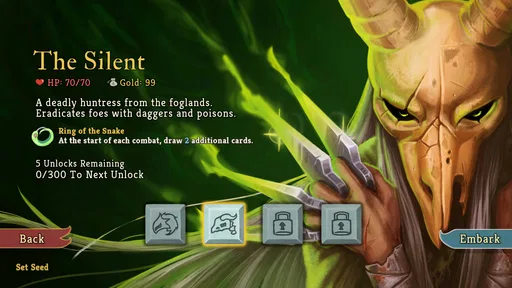
The game starts by letting you choose from one of the initial characters, each with distinct abilities and starting decks. As you progress, you'll collect cards, relics, and potions to enhance your deck and power through levels. The variety of cards and strategies you can employ is immense, which means you'll find yourself constantly experimenting with different tactics.
Gameplay Mechanics: A Balancing Act
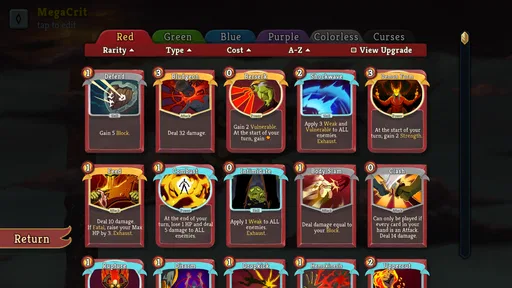
Building a strong deck is at the heart of Slay the Spire. You'll need to balance attack and defense, while also considering the potential synergies between cards. The game does an excellent job of introducing new elements gradually, ensuring you're not overwhelmed right away. But don't be fooled—mastering the mechanics takes time and patience.
You'll encounter different types of encounters, including standard enemies, elite foes, and bosses. Each type presents its own set of challenges and requires different strategies. For example, while a regular enemy might fall to brute force, an elite might require more finesse and tactical planning.
Strategic Elements: Relics and Potions
One of the aspects that makes this game so engaging is the presence of relics and potions. Relics provide passive bonuses that can greatly enhance your playstyle. Choosing the right relics can mean the difference between a victorious run and a swift defeat. Potions, on the other hand, can be used in a pinch to turn the tide of battle.
The strategic depth comes from knowing when and how to use these elements. Should you save a powerful potion for a boss fight, or use it now to avoid taking damage? These decisions keep you engaged and thinking several steps ahead.
Visuals and Soundtrack: Simple Yet Effective
Visually, Slay the Spire opts for a hand-drawn art style that's both charming and effective. It may not be the most graphically intensive game out there, but its simplicity works in its favor. The animations are smooth, and the interface is intuitive, making it easy to navigate through the different menus and options.
The soundtrack complements the gameplay perfectly, with tunes that are both relaxing and tense, matching the ebb and flow of battles. The sound effects, too, are satisfying, especially when you land a critical hit or pull off a powerful combo.
Replayability: Infinite Possibilities
One of the standout features of Slay the Spire is its replayability. Thanks to the roguelike elements, no two runs are ever the same. The game encourages experimentation with different deck builds and strategies, and the random nature of relics and card rewards ensures that you'll always have something new to try.
Additionally, the developers frequently update the game with new content and balance changes, keeping it fresh and exciting. This is a game that you can sink hours into and still feel like there's more to explore.
So there you have it—my take on Slay the Spire. It's a game that challenges your mind, rewards creativity, and keeps you coming back for more. Whether you're a fan of card games or just looking for something new to try, this game is a must-play. Trust me, once you start climbing the spire, you won't want to stop.
Pros
- Unique card-based strategy gameplay.
- Highly replayable with different paths.
- Challenging yet rewarding difficulty.
- Engaging art style and animations.
- Regular updates with new content.
Cons
- Steep learning curve for beginners.
- Requires constant internet connection.
- Can be time-consuming to master.
- Occasional bugs in the mobile version.
- Limited character customization options.
FAQs for Slay the Spire
What is the main objective of Slay the Spire?
Slay the Spire is a unique blend of deck-building and roguelike elements where the main objective is to ascend a mysterious spire. Players choose from different characters, each with unique abilities, and build a deck of cards to battle enemies, defeat bosses, and ultimately conquer the spire.
Is Slay the Spire suitable for beginners?
Yes, Slay the Spire is beginner-friendly. While it offers deep strategic gameplay, it provides tutorials and tips to help new players understand the mechanics. The game starts with simpler stages that gradually increase in complexity, allowing beginners to learn and adapt as they progress.
What platforms is Slay the Spire available on?
Slay the Spire is available on multiple platforms, including Android, iOS, PC, Nintendo Switch, PlayStation 4, and Xbox One. This wide availability ensures that players can enjoy the game on their preferred device, whether at home or on the go.
Does Slay the Spire require an internet connection to play?
No, Slay the Spire does not require an internet connection for gameplay. Once downloaded, players can enjoy the game offline, making it a great option for those looking to play without relying on Wi-Fi or mobile data.
How does the deck-building mechanic work in Slay the Spire?
In Slay the Spire, players build their deck by choosing cards from a selection offered after each battle. Strategic decisions are crucial, as players must consider card synergies and manage resources like energy. This mechanic adds depth and replayability, encouraging players to experiment with different strategies.


